
When the Indian Premier League began in 2008, even its boldest supporters could not predict how deeply it would alter global cricket. The tournament did far more than entertain; it rewired the sport’s competitive thinking and reshaped the future of the T20 format. Today, the IPL is not merely a league it is a laboratory of ideas, a pressure chamber where new strategies form, and a platform where explosive records redefine what is possible.
Some of these records shocked the world; others slowly shifted the game’s foundation. But all of them, in different ways, changed how T20 cricket is played. From unbelievable individual milestones to team achievements that forced coaches to rethink strategies, IPL records have become teaching manuals for modern franchise cricket.
This article explores those game-changing records with the depth of expert analysis, the narrative touch of magazine writing, and the precision of newsroom reporting.
The 175 That Redefined Power-Hitting and Elevated Opening Roles*:
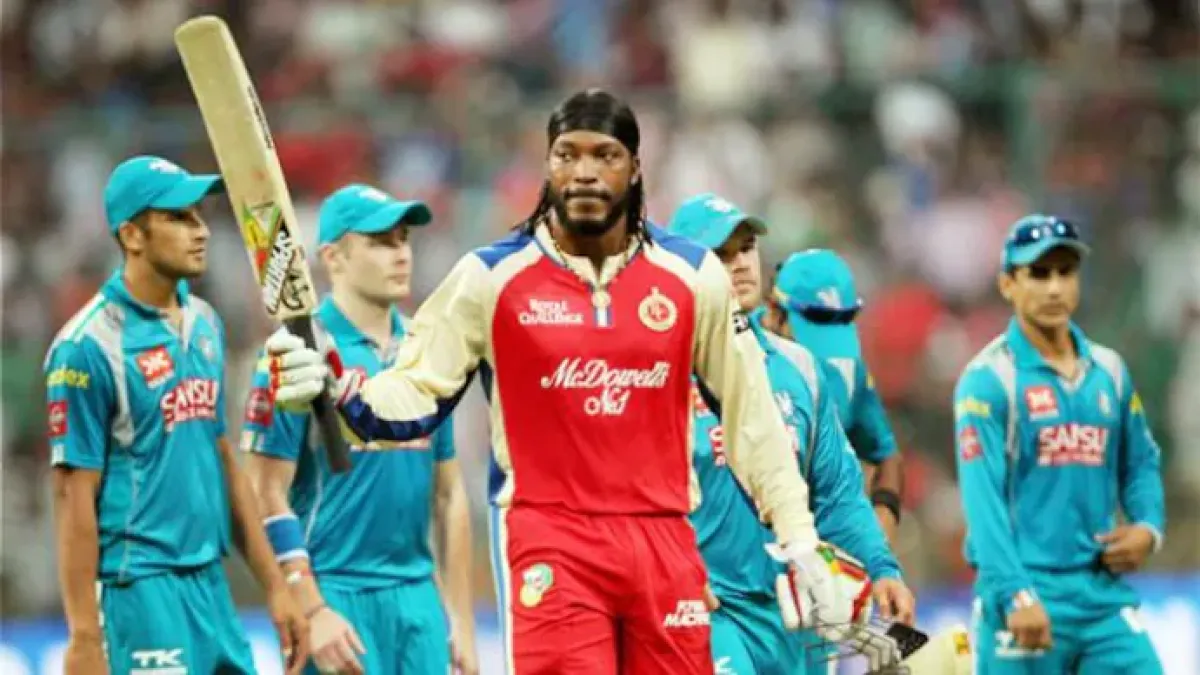
On April 23, 2013, Chris Gayle’s unbeaten 175 for Royal Challengers Bengaluru against Pune Warriors didn’t just break records it recalibrated the meaning of T20 dominance. At a time when teams considered 180 a match-winning score, Gayle produced 175 alone. Bowlers had no answers, fielders had no influence, and even seasoned analysts struggled to explain what they were witnessing.
More importantly, the innings changed how teams viewed the opening role. Until then, many franchises preferred balanced starts and cautious shot selection in the first six overs. Gayle’s strike rate of 265 in that game showed the world that T20 cricket rewards aggression at the top, not caution.
After 2013, almost every league adopted the “power opener” template. PSL teams chased hard-hitting overseas openers. BBL franchises recruited players who attacked from ball one. Even national teams redefined their selection philosophy England’s 2019 and 2022 white-ball squads reflected this mindset.
The IPL had shown that power-hitting was not a gamble, it was the new normal.
The Evolution of Fastest Fifties: Enter the Era of High-Risk Reward
In the early seasons, teams celebrated 20-ball fifties as rare achievements. But as the IPL matured, batters began stretching the boundaries of possibility. KL Rahul’s 14-ball fifty in 2018 changed the league’s rhythm. Pat Cummins matched that feat in 2022, reminding the world that lower-order batters could rewrite expectations too.
These lightning fifties force modern franchises to rethink middle- to lower-order recruitment. A number seven who can produce a 15-ball 40 is now more valuable than a technically correct 25-run anchor. This record also contributed to a shift in auction strategy: franchise scouts now prioritize batters with high intent, not necessarily high averages.
Teams worldwide have copied this blueprint. SA20 sides encourage late-innings acceleration. BBL finishers are selected heavily on strike rate above 160. Even the IPL’s domestic circuit now produces fearless short-format hitters inspired by these benchmarks.
The quest for the fastest fifty continues not as a trivial stat, but as a symbol of T20’s evolving aggression.
Most Sixes in a Season: How Brute Force Became a Tactical Weapon?
When a player smashes more than 50 sixes in a season as Chris Gayle and later Jos Buttler did, teams take notice. Buttler’s 2022 season, with 45 sixes and multiple match-defining blows, captured how sustained power translates to tournament dominance.
The significance of this record lies in consistency. Hitting one or two explosive innings is common; doing it across an entire season shows psychological strength and strategic clarity.
Franchises now design batting orders around designated six-hitters, pairing them with strike-rotators who let the destroyers take center stage. Coaches also restructured practice sessions with boundary-hitting drills, strength conditioning for rotational power, and scenario-based hitting simulations.
The IPL taught global teams that six-hitting is not random, it is engineered.
Highest Successful Chase: The Day Chase Pressure Lost Its Fear Factor
When Rajasthan Royals chased down 224 against Punjab Kings in 2020, it marked a turning point. Large chases were no longer statistical anomalies; they became achievable targets with the right tempo and batting structure.
This record reshaped defensive bowling strategies worldwide. Bowlers could no longer rely on “par” totals or assume that scoreboard pressure would dictate the chase. Captains began adjusting field placements, using defensive lines earlier in the game, and identifying specific overs to attack rather than defend.
Chasing teams changed too. They adopted a phase-by-phase approach, breaking big totals into manageable segments rather than being overwhelmed by the scoreboard.
A simplified comparison shows how this record shifted tactical planning:
|
Before High Chases |
After High Chases |
|
Chasing 200 seen as improbable |
Chasing 200 seen as chaseable |
|
Middle overs used for consolidation |
Middle overs used for controlled aggression |
|
Death overs panic common |
Death overs approached with calculated hitting |
|
Powerplay failure meant collapse |
Teams backed depth and intent |
Modern T20 cricket whether at the 2024 T20 World Cup or in SA20 or BBL reflects this IPL-driven shift.
Most Wickets in a Season: When Bowlers Took Back Control
In a format dominated by batters, bowlers needed a record to remind the world of their influence. Dwayne Bravo’s 32 wickets in 2013, and later Harshal Patel’s 32 in 2021, did exactly that.
These performances reclaimed narrative space for bowlers in the IPL. Death bowling, once considered a survival exercise, became a specialized skill with global demand. Slower balls, wide yorkers, dipping cutters, and pace variations became prized weapons.
As a result, franchises across leagues began investing in bowling coaches and analytics. Wrist spinners such as Rashid Khan, Kuldeep Yadav, and Zampa became central to middle-overs control strategies. The IPL showed that bowlers had more power than the format suggested.
RCB’s 2025 title win reinforced this trend. Their improved bowling depth, especially in the death overs, demonstrated that strong bowling units are not optional; they are title cornerstones.
Andre Russell’s Strike Rate Records: Redefining the Finisher’s Job
Andre Russell’s peak seasons especially 2019 when he struck at an astonishing 204 across the tournament redefined what a finisher could be. Until then, the finisher’s role was to “add runs at the end”; Russell turned it into a full-blown weapon.
Finisher recruitment strategies have since shifted across T20 leagues. Teams look for all-rounders with raw power, long-range hitting, and the ability to enter with five overs left and change the game instantly.
This role expansion inspired tactical changes:
- Teams now treat overs 16–20 as separate micro-innings.
- Coaches prioritize boundary-hitting over strike rotation in these overs.
- Lower-order batters train specifically for short-burst intensity.
Russell didn’t just break records he broke the concept of limited-overs finishing and rebuilt it from scratch.
Rashid Khan and Sunil Narine: Spin Records That Reshaped Middle Overs
Two spinners Sunil Narine and Rashid Khan carved out records that fundamentally altered T20 strategies. Narine’s economy rates in his early seasons and Rashid’s wickets-plus-control combination created a tactical revolution: the middle overs became the most strategic part of an innings.
The narrative shifted from “contain runs” to “win matches through spin chokeholds.”
The impact went global:
- National teams reintroduced wrist spinners into white-ball squads.
- SA20 and BBL sides structured bowling around spin-matchups.
- Auction dynamics changed, with elite spinners commanding premium prices.
A quick comparison illustrates how these records redefined match structure:
|
Old Middle Overs Strategy |
New IPL-Influenced Strategy |
|
Batters aimed for risk-free singles |
Batters forced to break pressure |
|
Spinners used for containment |
Spinners used as attacking weapons |
|
Field spread to minimize boundaries |
Fields set to induce false shots |
|
Overs seen as a phase to “hold on” |
Overs seen as a phase to “take control |
Modern leagues owe their middle-overs tactics to these two spinners.
Lowest Defended Totals: The Art of Squeezing Even When Runs Are Low
When Sunrisers Hyderabad defended 118 against Mumbai in 2018 or CSK defended 116 in earlier seasons, they showed the world that even small totals could be match-winning with disciplined bowling and sharp fielding.
These records taught modern franchises that mental resilience is as critical as tactical precision. Bowling units began focusing on dot-ball patterns, fielders worked on agility drills, and captains learned to attack even with small targets.
Even internationally, teams use this template. The 2024 T20 World Cup saw multiple sides defend seemingly inadequate scores using similar strategies inspired by IPL defenses.
The IPL taught cricket that pressure is a resource not a burden.
Most Wins in a Season: Building Machines, Not Just Teams
When Mumbai Indians set the record for one of the highest win tallies in a season, it exposed the value of systems thinking. Their success wasn’t dependent on one player; it came from role clarity, strategic retention, scouting, and depth.
Chennai Super Kings also built long-term success using the same structural philosophy.
These records showed modern franchises that consistency is not luck it is the by-product of intelligent systems.
Today, teams across PSL, CPL, and SA20 talk about “Mumbai-style depth” and “Chennai-style stability.” The record books became coaching manuals.
RCB’s 2025 Title Run: A New Benchmark for Reinvention

Perhaps the most instructive recent record is not a statistical milestone but a symbolic oneRoyal Challengers Bengaluru finally lifting their maiden IPL title in 2025 after years of near-misses.
Their achievement taught modern franchises that reinvention is possible. RCB transformed their bowling unit, restructured batting, used real-time data smarter, and relied on domestic depth. The 2025 season is now a case study in resilience, proving that long narratives of failure can be rewritten through strategic evolution.
This win also changed fan perception of what patience, planning, and identity-building can achieve in T20 cricket.
Conclusion: Records Are Not Just Numbers They Are Playbooks
IPL records have never been static achievements. They are turning points. Each record changed something fundamental about T20 cricket:
- The way batters attack powerplays.
- The way finishers define death overs.
- The way bowlers reclaim control.
- The way franchises scout talent and define roles.
These records forced coaches, analysts, and captains to upgrade their thinking. They inspired leagues across the world to adopt IPL-born strategies and reinforced the IPL’s position as cricket’s most influential innovation engine.
The future of T20 cricket will continue to be shaped by these records not because they sit in a statistics book, but because they changed how the game is played, understood, and imagined.