
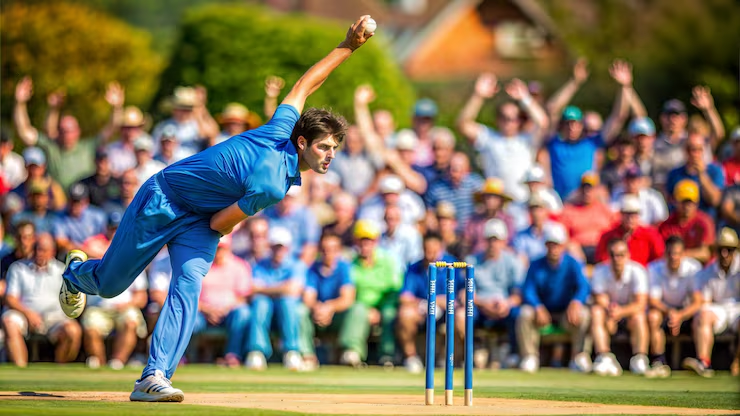
Cricket is a sport that combines skill, strategy, and speed, but it also involves inherent risks. Fast bowlers, powerful batsmen, and unpredictable ball trajectories create situations where player safety is paramount. Helmets, once considered optional, have evolved into essential equipment, providing crucial protection against head injuries. Over the decades, helmet design, materials, and safety standards have transformed significantly, reflecting both technological innovation and increased awareness of sports safety. Modern helmets are designed to absorb impact, reduce concussions, and allow freedom of movement while maintaining comfort during long matches.
The role of technology in training and safety has also expanded. Interactive platforms, such as Casino Lemon, illustrate how modern athletes engage with simulations, visualizations, and interactive drills to anticipate high-speed balls, complementing protective equipment with enhanced reflexes and situational awareness.
Early Helmets and Their Limitations
In the early years, cricket helmets were rudimentary, often made from basic plastic shells with minimal padding. Many players avoided helmets due to discomfort, reduced visibility, or lack of awareness about injury risks. These early designs provided some protection against minor impacts but were insufficient against high-speed balls, bouncers, or accidental collisions with stumps.
Common issues with early helmets included:
-
Limited impact absorption – Minimal padding meant high-velocity balls could still cause head injuries.
-
Reduced visibility – Bulky designs and poorly positioned grills obstructed players’ sightlines.
-
Discomfort – Helmets were heavy, poorly ventilated, and difficult to wear for long periods.
-
Lack of standardization – No consistent regulations meant protection levels varied widely.
-
Player resistance – Many professionals preferred traditional caps or no headgear at all.
The limitations of these early helmets highlighted the need for stricter safety standards and the integration of advanced materials to improve both protection and usability. Gradually, cricket authorities recognized that helmets were not just optional gear but a critical component of player safety.
Advances in Helmet Design
Modern cricket helmets combine advanced polymers, high-density foam, and metal grills to maximize protection while minimizing weight. Designers focus on distributing impact forces evenly across the helmet, reducing the risk of concussions or fractures. Ventilation, adjustable fittings, and ergonomic padding enhance comfort, allowing players to focus on performance without distraction.
Key innovations in modern helmet design include:
-
Reinforced polymer shells – Provide strong outer protection while keeping weight low.
-
Multi-layer shock-absorbing foam – Reduces the impact force transmitted to the skull.
-
Precision-engineered metal grills – Prevent ball penetration while maintaining visibility.
-
Adjustable padding and straps – Ensure a secure and personalized fit for each player.
-
Enhanced ventilation systems – Maintain comfort and airflow during long innings.
-
Ergonomic shaping – Balances protection with freedom of movement and minimal obstruction.
Helmet evolution also reflects a deeper understanding of biomechanics and impact physics. Materials are rigorously tested to withstand high-velocity impacts, and grills are engineered to prevent balls from penetrating while ensuring visibility. These improvements have made helmets a reliable safety barrier, significantly reducing the incidence of head injuries in professional cricket.
Safety Standards and Regulations
Cricket governing bodies have implemented strict helmet safety standards to protect players at all levels. Helmets must meet specific impact resistance tests, structural integrity criteria, and fit requirements. Regular certification ensures that both professional and amateur players have access to reliable protection. Helmets are now mandatory in many competitions for batsmen facing fast bowlers, wicketkeepers standing up to the stumps, and fielders in close positions.
Certification and Testing
All cricket helmets must pass rigorous certification tests to ensure they can withstand high-speed impacts. This includes assessing the helmet’s ability to absorb force, protect against penetration, and maintain structural integrity under repeated strikes.
Fit and Adjustability Standards
Helmets are required to provide a secure, adjustable fit. Proper padding, straps, and customizable features ensure the helmet stays in place during movement and collisions while remaining comfortable for long innings.
Ongoing Safety Updates
Regulations are continuously updated based on research into head injuries, advances in material science, and new helmet designs. Ongoing monitoring ensures that helmets remain effective against emerging risks, particularly with increasing ball speeds and aggressive play styles.
Training and Awareness
Protective equipment alone is not enough. Players are trained to anticipate high-speed deliveries, maintain focus, and use proper techniques to reduce the risk of injury. Drills often incorporate simulated bouncers, reaction exercises, and situational scenarios to prepare players physically and mentally for match conditions. Modern digital tools allow real-time feedback, helping players identify risky movements and improve their safety awareness.
Impact of Helmet Evolution on the Game
The evolution of helmets has changed the approach to batting and fielding. Players can take calculated risks, face fast bowlers with confidence, and adopt more aggressive strategies. This shift has influenced match dynamics and allowed cricket to maintain its competitive and exciting nature while prioritizing player safety.
Conclusion
Cricket helmets have evolved from basic protective shells into sophisticated equipment designed to maximize safety without compromising performance. Advances in materials, design, and safety standards have significantly reduced the risk of head injuries and allowed players to compete confidently. Combined with training, awareness, and regulatory oversight, modern helmets ensure that player safety is central to the game, enabling cricket to remain both challenging and safe for professionals and amateurs alike.
