
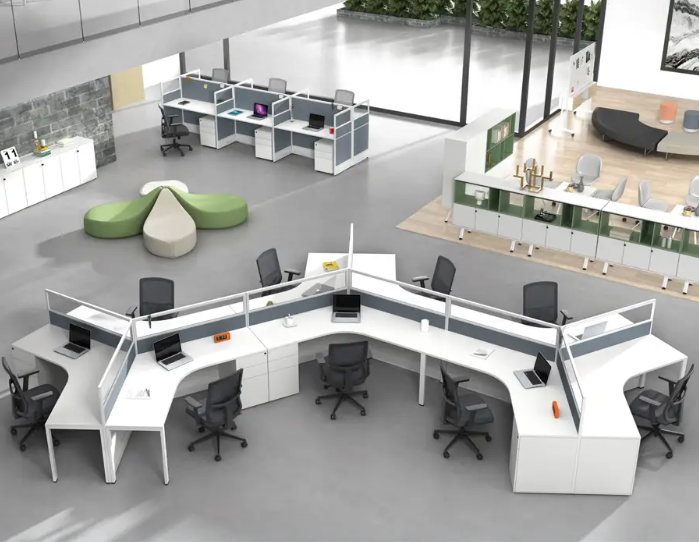
Modular Workstation: The Modern Office Solution for Productivity
The traditional office setup is rapidly becoming outdated. With the rise of hybrid work, fast-growing teams, and the need for smarter space utilisation, businesses are turning toward more adaptable workspace solutions. At the centre of this transformation is the modular workstation.
A modular workstation is not just office furniture—it is a strategic tool that helps companies improve efficiency, reduce costs, and create future-ready workplaces. From startups and co-working spaces to corporate headquarters and call centres, modular workstations are now the foundation of modern office design.
This guide explores what modular workstations are, their benefits, types, materials, applications, costs, and why they are the smart choice for today’s evolving work environment.
What Is a Modular Workstation?
A modular workstation is a flexible office furniture system made up of interchangeable components that can be assembled, rearranged, expanded, or reduced based on changing needs. Unlike conventional desks that remain fixed in one position, modular systems are designed to evolve with your business.
A complete modular workstation system typically includes:
- Modular desk surfaces
- Privacy or divider panels
- Storage units such as pedestals and drawers
- Integrated power and data access
- Cable management trays and ports
- Monitor arms and accessories
Each element functions independently, allowing organisations to redesign layouts without replacing the entire setup.
Why Businesses Are Switching to Modular Workstations
Modern workplaces face constant change—new hires, shifting departments, hybrid schedules, and growing operational demands. Static furniture can no longer keep up. Modular workstations provide the agility companies need to stay competitive.
Key reasons businesses prefer modular workstations include:
- Fast layout reconfiguration
- Lower long-term furniture investment
- Improved space efficiency
- Support for collaborative work
- Enhanced comfort and ergonomics
This combination of adaptability and performance makes modular workstations the new standard in office environments.
Core Advantages of Modular Workstations
1. Flexible Layout Design
One of the biggest advantages of modular workstations is layout flexibility. Businesses can easily:
- Convert single desks into team clusters
- Create private cubicles or open benches
- Reorganise departments without construction
- Adapt layouts for project-based workflows
This flexibility makes modular workstations ideal for dynamic teams and fast-paced operations.
2. Built for Scalability
Business growth often creates workspace challenges. Modular workstations are designed to grow with your company:
- New desks can be added without disrupting existing setups
- Departments can expand or shrink seamlessly
- Seating capacity can be adjusted with minimal cost
This scalability is especially valuable for startups, expanding offices, and enterprises with changing staffing levels.
3. Smarter Use of Office Space
Well-planned modular workstation layouts help companies maximise every square metre of office space by:
- Reducing unnecessary walkways
- Improving desk density without overcrowding
- Supporting vertical storage solutions
- Maintaining clear movement paths
Better space utilisation directly translates into lower rental costs and higher operational efficiency.
4. Boosted Team Collaboration
Open modular workstation designs naturally promote:
- Faster communication between teams
- Easier knowledge sharing
- Stronger teamwork and interaction
- A more energetic work culture
At the same time, adjustable panels offer the option to introduce privacy where focus is required.
5. Improved Ergonomics and Employee Well-Being
Employee health is a growing priority in workplace planning. Modern modular workstations support ergonomics through:
- Sit-stand desk options
- Adjustable monitor arms
- Proper desk heights and legroom
- Compatibility with ergonomic chairs
These features reduce fatigue, improve posture, and help prevent long-term musculoskeletal issues.
6. Easy Relocation and Reinstallation
Modular workstations are designed for mobility. They can be:
- Dismantled quickly
- Transported easily
- Reinstalled at new locations
- Reconfigured without specialist construction
This makes them ideal for businesses that relocate or regularly redesign their office layouts.
Different Types of Modular Workstations
1. Individual Modular Workstations
Single-user modular desks are ideal for employees who require focused working conditions, such as:
- Accountants
- Software developers
- Designers
- Administrative staff
They typically feature privacy panels, personal storage, and ergonomic desk layouts.
2. Multi-Person Modular Workstations
Multi-user systems are among the most popular configurations and include:
- 2-person workstations
- 4-person workstations
- 6-person and 8-person team clusters
These layouts are widely used in sales teams, call centres, and shared office spaces.
3. Open-Plan Modular Workstations
Open-plan modular workstations feature shared desk systems with minimal partitions. They are ideal for:
- Tech offices
- Creative agencies
- Co-working environments
These layouts promote teamwork, transparency, and modern workplace aesthetics.
4. Cubicle-Style Modular Workstations
Cubicle modular systems use higher panels to create semi-private individual work zones. They offer:
- Better visual separation
- Improved sound control
- Increased concentration
They are commonly used in HR departments, finance teams, and administrative offices.
5. Height-Adjustable Modular Workstations
Sit-stand modular workstations allow workers to alternate between sitting and standing positions, which helps:
- Improve circulation
- Increase alertness
- Reduce back and neck strain
- Improve overall comfort
These are rapidly becoming standard in health-focused workplaces.
Materials Used in Modular Workstation Systems
Material quality plays a crucial role in strength, durability, and appearance. Common materials include:
- Steel frames for maximum load capacity
- Aluminium structures for lightweight strength
- MDF or particleboard surfaces with laminate coatings
- Fabric or acoustic panels for noise absorption
- Tempered glass dividers for modern office aesthetics
The right material combination ensures both visual appeal and long service life.
Industry Applications of Modular Workstations
Modular workstations are used across a wide range of industries, including:
- Corporate offices – management, accounting, legal, HR
- IT and software companies – developers and engineers
- Call centres and BPOs – high-density seating environments
- Co-working spaces – hot-desking and shared offices
- Educational institutions – computer labs and training rooms
- Industrial offices – control rooms and technical departments
Their flexibility makes them suitable for almost any professional environment.
Custom Modular Workstation Design
Customisation is one of the biggest strengths of modular workstation systems. Businesses can tailor:
- Desk sizes and shapes
- Partition heights and finishes
- Storage placement and capacity
- Power, USB, and network point locations
- Cable management solutions
- Colour schemes and corporate branding
A fully customised modular workstation enhances workflow efficiency while reinforcing brand identity.
Modular Workstation Pricing and Investment Value
The cost of modular workstations depends on multiple factors, including:
- Total number of workstations
- Layout complexity
- Materials used
- Storage and electrical features
- Degree of customisation
While the initial purchase may cost more than traditional desks, modular workstations provide better long-term value through:
- Reusability during future expansions
- Reduced relocation costs
- Longer furniture lifespan
- Lower replacement frequency
Over time, the total cost of ownership is significantly lower.
Installation and Maintenance
Installation Advantages:
- Quick on-site assembly
- Minimal disruption to daily operations
- Clean and organised workspace setup
Maintenance Requirements:
- Regular surface cleaning
- Periodic panel and frame inspection
- Electrical system checks
- Cable management adjustments
Modular workstation systems are designed for durability and low maintenance.
Environmental Benefits of Modular Workstations
Sustainability is now a major factor in office planning. Modular workstation systems support eco-friendly initiatives by:
- Reducing furniture waste through reusability
- Using recycled and low-emission materials
- Extending product life cycles
- Supporting green building standards
This makes modular workstations a smart choice for environmentally responsible businesses.
Modular Workstation vs Traditional Office Desks
Compared to fixed office desks, modular workstations deliver:
- Higher flexibility
- Greater scalability
- Easier relocation
- Better space optimisation
- Stronger long-term cost efficiency
Traditional desks simply cannot match the adaptability required by modern workplaces.
Conclusion
The modular office workstation is no longer just a design trend—it is a practical, scalable, and future-ready solution for modern offices. Its ability to adapt to workforce changes, support productivity, and maximise space efficiency makes it a strategic business investment.
From growing startups to multinational enterprises, modular workstation systems provide the flexibility, comfort, and cost control needed in today’s fast-changing work environment. With high customisation, ergonomic advantages, and sustainability benefits, modular workstations offer a complete solution for modern workspace needs.
If your company is planning a new office setup, expansion, or renovation, investing in a high-quality modular workstation system is one of the most efficient and future-proof decisions you can make.