
Vaping guides are written in room temperature. The advice assumes a device at a comfortable twenty degrees, liquid at its intended viscosity, a battery in its happy thermal range and a vaper standing somewhere mild — and then January arrives, or a heatwave, and the kit starts behaving strangely in ways no beginner guide predicted: batteries draining by lunchtime in the cold, pods weeping liquid in the heat, harsh puffs on frosty mornings, flavour that reads differently in August than it did in March. None of it is malfunction; all of it is physics, and all of it is manageable with a season’s worth of small adjustments. This guide is the year-round manual: what cold actually does to batteries, liquid and vapour; what heat does and why summer is the harder season; the transitional and wet-weather chapters; and the seasonal rhythms of flavour and habit that veterans adjust for without thinking. Learning how to vape covers the technique; this covers the weather it happens in.
Winter: What Cold Does to the Battery
The season’s headline effect is electrochemical: lithium batteries deliver noticeably less capacity in the cold, because low temperatures slow the chemistry that moves charge — the same reason phones die on ski lifts. A device that comfortably lasted the day in October can hit low battery by mid-afternoon in a freezing January spent outdoors, with nothing wrong except thermodynamics. The management is straightforward: carry the device in an inside pocket, where body heat keeps it in its comfortable range, rather than an outer coat pocket at air temperature; expect and forgive faster drain on outdoor days, topping up opportunistically as this series always advises; and never charge a device that is actually cold from prolonged exposure — let it return to room temperature first, since charging chilled lithium is the one genuinely unkind thing winter tempts you into. Capacity lost to cold returns as the cell warms; it is a performance effect, not damage.
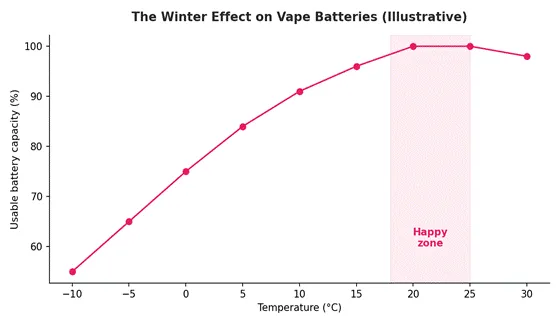
The winter effect — how usable battery capacity falls as temperature drops (illustrative).
Winter: Liquid, Vapour and the Frosty Draw
Cold touches the liquid side too, more gently. E-liquid thickens as temperature falls — VG especially — which in properly cold conditions slows wicking: the practical symptoms are slightly weaker draws and, if you chain-puff, the dry harshness of a wick refilling slower than you are emptying it. The fixes are rhythm and residence: slightly longer gaps between puffs outdoors, and the inside-pocket habit again, which keeps liquid at body-warm viscosity. Two cosmetic effects complete the winter picture, both harmless: exhaled vapour is dramatically more visible in cold air — worth knowing for the discretion techniques elsewhere in this series, since a winter exhale advertises what a summer one whispers — and the first draw on a device left in a cold car feels sharper and cooler on the throat, which is temperature, not a fault. And on that cold car: overnight vehicle storage in winter is nearly as unkind as summer’s version — condensation inside cold devices as they rewarm indoors is a real, if minor, corrosion consideration. The kit sleeps indoors, all year.
Summer: The Genuinely Harder Season
Counterintuitively, heat is the season that actually damages things. Warm liquid thins, and thin liquid over-wicks: the classic summer complaints — pods weeping into the device bay, condensation gurgle, the faint leak that never happened all winter — are viscosity effects of storage temperature, and their epicentre is always the same crime scene: the parked car, where cabin temperatures on a sunny day soar far past anything electronics or liquid should meet. Heat is also the battery’s true enemy — where cold merely suppresses performance temporarily, sustained heat permanently ages lithium — and it degrades liquid itself, darkening and dulling flavour through accelerated oxidation. The summer rulebook: never the car, ever, for device or liquids; shade over sunlight for anything that carries e-liquid, with beach bags and windowsills as named offenders; store the device upright so any thinned seepage stays where it belongs; and expect coils to gunk marginally faster in heavy heat, with sweet liquids leading as always. Summer care is mostly the absence of five bad parking decisions.
Summer: Hydration and the Warm-Weather Session
The vaper’s own physiology joins the summer equation. PG and VG are humectants — mildly drying by nature — and stacking that on top of warm-weather fluid loss produces the parched-mouth, dulled-flavour sessions that vapers misdiagnose as liquid problems every July. The fix is the least technical in this series: water, deliberately, alongside warm-weather vaping — which doubles as the flavour-perception upgrade the taste guide in this series promises. Session style adapts too: dense warm vapour is less pleasant on a hot day, and many vapers naturally drift toward lighter draws, mentholated and icy profiles, and shorter sessions in high summer — follow the drift, it is your palate being sensible. And a small courtesy note for the season of open windows and shared gardens: summer is when your vapour meets the most bystanders, so the etiquette toolkit earns its keep from June to September.
Rain, Damp and the British Transitional Chapter
Between the poles sits the national default: mild, wet and changeable, with its own short syllabus. Water and electronics keep their traditional relationship — a vape caught in genuine rain wants a pocket, not a heroic outdoor session, and a soaked device should dry thoroughly before use or charging, with rice folklore replaced by the boring correct answer of time, airflow and patience. Damp’s subtler effect is on storage: garages, sheds and gym bags in wet seasons are humid environments where charging ports and contacts slowly suffer — the indoor drawer wins again. Autumn and spring otherwise mostly behave, with one transitional note worth having: the year’s first properly cold or hot week is when the seasonal symptoms above debut, and the vaper who recognises ‘battery dying early’ as November rather than breakage saves themselves a warranty email. The kit is not failing; the year is turning.
The Seasonal Rhythm of Flavour and Habit
Beyond physics, the year moves through your palate and patterns, and noticing it improves both. Flavour seasonality is real and near-universal: icy, citrus and light fruit profiles peak in appeal through warm months, while colder seasons pull vapers toward rounder, softer, dessert-leaning territory — the same drift as food and drink, and worth shopping ahead of rather than against; the rotation strategy this series recommends gains a seasonal axis for free. Consumption has rhythm too: social summer weeks and festive Decembers run heavier for many, dark January commutes lighter — knowledge that makes the supply maths and any step-down scheduling smarter, since the reduction guide’s advice to pick calm seasons has a literal calendar meaning. None of this demands a spreadsheet; it asks only the veteran’s trick of noticing, once, and adjusting the standing order accordingly.
The Year-Round Kit Strategy
Some vapers formalise all this into seasonal kit: a winter preference for devices with bigger batteries and displays (drain visibility matters most in January), a summer lean toward sealed prefilled pods whose closed systems handle heat and thin liquid far more gracefully than open tanks, and a standing spare-device habit that turns any weather casualty into an inconvenience rather than an emergency. Liquid buying follows season sensibly too: modest rolling stock rather than deep summer stockpiles that sit oxidising through the heat, and the multi-buy rhythm timed to consumption’s actual seasonal curve. A UK specialist such as pink vape carries the range across formats and the icy-to-cosy flavour spectrum that seasonal rotation draws on, with bundle pricing that suits the rolling-stock approach — the supply line, as ever in this series, doing its work quietly in the background of every season.
The Four-Season Cheat Sheet
The guide, compressed for the fridge door. Winter: device in the inside pocket, forgive the drain, no charging while cold, slower puff rhythm outdoors, enjoy the theatrical exhale somewhere appropriate. Summer: never the car, shade always, upright storage, water alongside sessions, expect the icy-flavour drift and marginally faster coil gunk. Wet seasons: pockets beat rain, dry thoroughly before charging, indoor storage over damp outbuildings. All year: opportunistic charging, sealed spares in rolling stock, the seasonal flavour axis folded into rotation, and the first odd week of each new season read as weather, not warranty. Nothing on the sheet costs more than attention, and together it keeps the same kit performing identically from the January commute to the August terrace.
Seasonal FAQs
The calendar’s remaining questions. Does vapour behave differently in humidity? Slightly — humid air holds the plume visible marginally longer — but the effect is cosmetic; damp’s real business is with storage and ports, as above. Can I vape in the rain? The vaper is waterproof; the device dislikes soaking — a sheltered session or a cupped hand covers drizzle, and a genuine downpour is a pocket decision. Why does my throat feel scratchier in winter? Cold dry air is itself an irritant and central heating dries you out — water helps here exactly as it does in summer, and softer-profile liquids suit the season. Do coils really die faster in summer? Marginally, via thinner liquid and heavier gunking — the practical answer is watching flavour rather than the calendar. Should I change strength seasonally? No — strength follows your habit, not the weather; what shifts seasonally is flavour preference and rhythm, and following those drifts is free. And is there a best season to start switching from smoking? The one you’re in: every seasonal challenge above is trivial next to the difference the switch itself makes, and January’s cold pocket or July’s shaded bag are details a motivated week absorbs without noticing.
The Bottom Line
A vape is a small chemistry set with a battery, and chemistry has seasons: cold suppresses, heat degrades, damp corrodes, and liquid changes its mind about viscosity with every ten degrees. The year-round vaper’s skill is simply knowing which effects are visiting when — performance dips that reverse, versus the parked-car and sunny-shelf habits that genuinely wound — and running the short seasonal checklists that keep physics on side. Do that, and the habit becomes weatherproof: same satisfaction, same reliability, same flavour, whatever the sky is doing. Adults 18 and over, existing smokers and vapers only, in every season — and for anyone outside nicotine, the forecast never changes: none, year round.