
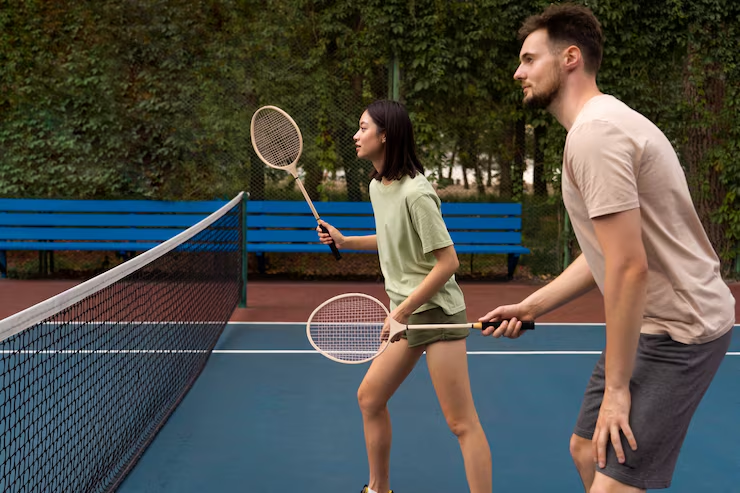
Padel has rapidly transformed from a European curiosity into a truly global sport in Singapore. There are multiple people who are present who are attracted to sports and the adrenaline rush that is provided by sports. Clubs and multiple sports facilities are always present, which form active communities, and competitive structures are also present.
The padel tournament in Singapore is particularly well-established due to its balance, accessibility, and professionalism as well. The sport appears to be extremely important for providing organised competition and structured events, which are known to go beyond casual play.
Competitive Play as a Community Driver
In the centre of the momentum are the tournament facilities and events, which are there. Such a padel tournament is not simply about winning matches, but they serve as the foundation for networking opportunities, wellness activities, and community-building exercises.
Many of the players are introduced in the clubs, coaches, and playing partners through competition. This environment encourages long-term engagement and also helps retain players who might otherwise drift away as the novelty of the sport fades.
Infrastructure and Professional Standards
As competitive demand is increasing, the expectations around the organisations and the transparency also rise. Players may want to clear their schedules, fair match formats, and reliable venues. Clubs must respond by adapting professional standards that mirror those which are seen in more established padel markets.
Digital platforms also play a crucial role here, as companies like Padelmesh provide significant value as well. By supporting the visibility and structured recovery, they can enable the players to stay informed and offer a centralised access to all the information. When tournaments are promoted through trusted channels, participation grows, and standards are also known to improve organically across the brand.
Additional Role of the Digital Ecosystems
As the padel matures, discoverability and trust are known to become some of the most decisive factors. Players can also expect accurate listings, verified details, and genuine feedback before committing time and money. Platforms like Padelmesh help in bridging the gap between ambition and execution by supporting clarity, consistency, and informed decision-making.
When tournaments, venues, and professionals are also presented within a coherent digital ecosystem. The friction is also reduced for everyone who is also involved here. Players can also focus on performance, organisers focus on the delivery, and clubs benefit from sustained engagement. This alignment is going to be essential for long-term growth rather than a short-lived enthusiasm.
The Regional Reference Point
Places like Singapore are known to have a reputation for efficiency and quality positions. It also acts as a natural reference point for padel in Asia. The international players and organisers are known to increasingly view the city as a launchpad for regional expansion. A well-run tournament hosted locally can also attract attention from the neighbouring markets.
This regional influence also helps in benefiting the local players with the exposure to diverse playing styles and competitive formats, accelerates skill development, and raises performance benchmarks.
Final Words
The growth of padel in Singapore depends on two factors, which include its future development and its existing competitive environment. The future development of padel as a sport will depend on the combination of organised tournaments and their supporting platforms and professional sports facilities.