
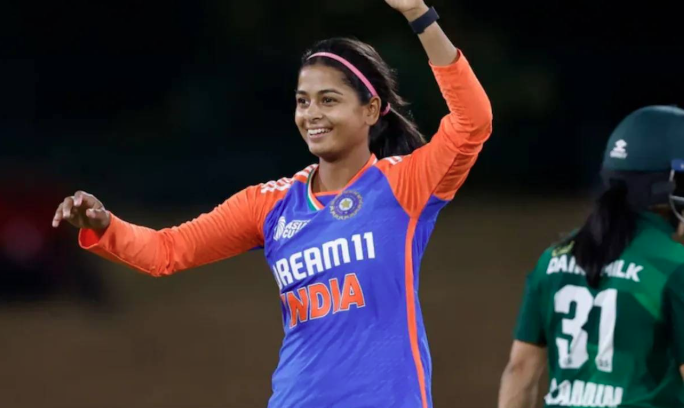
Indian women’s domestic T20 cricket is undergoing a quiet but powerful transformation. What was once a space dominated by experienced state players has, over the last few seasons, become a launchpad for teenagers and early twenty-somethings who play the game with confidence, clarity, and tactical awareness well beyond their years. By 2025, the rise of young talent is no longer an emerging trend. It is the defining feature of India’s domestic women’s T20 ecosystem.
This change has not happened overnight. It is the result of structural reform, increased match exposure, better coaching, and the ripple effect of franchise cricket. The Women’s Premier League has sharpened ambition, but the real foundation lies in domestic tournaments where young players are learning how to win games, not just participate in them.
A Domestic System That Now Rewards Readiness:
For a long time, domestic women’s cricket in India was about patience. Young players were expected to wait their turn, learn quietly, and break through gradually. Talent alone was rarely enough. Experience often outweighed impact.
That balance has shifted. In recent domestic T20 seasons, selection has become more performance driven. Teams are willing to trust teenagers in key roles if they show match awareness and execution. Age is no longer a barrier when readiness is visible.
This shift reflects a broader change in how domestic success is measured. Coaches now look beyond aggregates. They assess how players handle pressure, respond to setbacks, and contribute in decisive phases of the game. Young players who thrive in these moments rise quickly.
The Influence of the WPL on Domestic Ambition:
The introduction of the Women’s Premier League has fundamentally altered how young domestic players view their careers. The pathway from a state tournament to a packed stadium is now clear and immediate.
By the time the 2025 WPL title season concluded, domestic circuits were already feeling its influence. Young players were arriving better prepared, fitter, and more tactically aware. They understood that strong domestic T20 performances could lead to franchise contracts, financial stability, and accelerated development.
This awareness has sharpened intent. Batters play with purpose. Bowlers work on specific skills rather than generic consistency. Fielding standards have risen because athleticism is now a visible selection advantage.
Teenagers Playing Like Professionals:
One of the most striking developments in recent seasons is how composed young players look under pressure. It is no longer unusual to see a 17 or 18-year-old batting through a chase or bowling the final over of a tight match.
This composure comes from exposure. Domestic T20 tournaments now feature higher intensity due to stronger benches and closer contests. Young players are learning early that every over matters.
They are also benefiting from structured age group pathways. Under-19 and under-23 tournaments are aligned more closely with senior domestic formats, ensuring smoother transitions. By the time players reach senior teams, the jump feels manageable rather than overwhelming. As WPL Tickets give fans access to live action, the experience of watching young players perform under pressure can further solidify their professional mindset.
Batting Talent: Fearless but Calculated
Young Indian batters in domestic T20 cricket are redefining their approach. They are aggressive, but not reckless. The stereotype of unrestrained hitting has given way to situational awareness.
Many of these batters have grown up watching global T20 cricket. They understand powerplay value, matchups against spin, and the importance of strike rotation. Their innings often feature controlled acceleration rather than early risk.
In recent domestic seasons, several matches have been won by young batters pacing chases intelligently. They absorb pressure early, target weaker bowlers, and finish with confidence. This maturity is a direct outcome of better coaching and clearer role definition.
Bowling Depth Is Catching Up:
For years, batting depth was considered India’s strength in women’s cricket, while bowling development lagged behind. That gap is narrowing rapidly at the domestic level.
Young bowlers, both pace and spin, are emerging with clearer plans. Fast bowlers focus on swing and hard lengths rather than raw speed. Spinners work on drift, pace variation, and accuracy rather than relying solely on turn.
What stands out is adaptability. Bowlers now adjust lengths based on pitch and batter rather than sticking rigidly to plans. This flexibility is being nurtured early, making the transition to higher levels smoother.
Fielding as a Selection Tool:
Fielding has become a genuine differentiator in domestic T20 cricket. Young players are quicker, sharper, and more athletic than previous generations.
This emphasis is not accidental. Coaches and selectors increasingly value fielding as a non negotiable skill. A young player who saves runs consistently or creates chances through athleticism gains immediate attention.
Matches are often decided by small margins, and domestic teams recognize that fielding intensity can tilt results. As a result, young players train with professional expectations, knowing that effort and awareness matter as much as technical skill.
The Role of State Associations and Coaches:
State associations have played a critical role in this youth surge. Many have invested in better coaching structures, fitness programs, and scouting networks.
Young players are identified earlier and given opportunities to play up age groups when ready. Coaches are encouraged to trust talent rather than default to seniority.
The impact of this approach is visible. Teams look more balanced. Bench strength has improved. Competition for places has intensified, pushing standards higher across the board.
Domestic T20 as a Testing Ground, Not a Stepping Stone:

Domestic T20 cricket is no longer seen merely as preparation for international selection. It has become a serious competition in its own right.
Young players treat domestic matches as platforms to prove reliability, not just potential. They know performances are scrutinized by national selectors and franchise scouts alike.
This seriousness has elevated match quality. Games are tighter, strategies clearer, and execution sharper. Young players are learning how to handle expectations early, reducing shock at higher levels.
Comparing Then and Now: A Clear Shift
The evolution of domestic women’s T20 cricket becomes clearer when viewed across time.
|
Aspect |
Earlier Domestic T20 |
Current Domestic T20 |
|
Age profile |
Experience heavy |
Youth driven |
|
Batting approach |
Conservative starts |
Phase based aggression |
|
Bowling plans |
Generic consistency |
Role specific execution |
|
Fielding |
Secondary skill |
Core selection factor |
|
Career visibility |
Limited |
Direct franchise pathway |
This shift explains why young talent is not just emerging but sustaining success.
Psychological Growth and Confidence:
One of the most important changes is mental. Young players now enter domestic cricket believing they belong.
This confidence comes from visibility. Watching peers succeed in the WPL or international cricket reinforces belief. Players no longer feel they need years of validation before taking responsibility.
As a result, young captains are emerging. Teams are trusting youth with leadership roles, allowing them to learn decision making early. These experiences shape future international leaders.
Challenges That Remain:
Despite progress, challenges persist. Access to quality facilities still varies between states. Not all young players receive equal exposure or support.
Workload management is another concern. With increased matches and expectations, ensuring physical and mental well being is critical.
However, these challenges exist within a system that is clearly moving forward. Awareness has improved, and solutions are increasingly discussed openly.
The Link Between Domestic and International Success:
The rise of young domestic talent is already influencing the national setup. India’s women’s teams now have deeper benches and more competition for places.
Selectors have options. Players enter international cricket better prepared for pace, pressure, and tactical demands. This readiness shortens adaptation periods and improves consistency.
Domestic T20 cricket has become the engine room of this progress.
What the Next Generation Looks Like:
The next wave of Indian women cricketers will likely be more adaptable than any before. They will be comfortable switching roles, formats, and conditions.
They will also expect professionalism as standard. Fitness, analysis, and accountability will be part of their cricketing identity from the start.
This expectation is perhaps the most significant legacy of the current domestic system.
Conclusion:
The rise of young talent in Indian women’s domestic T20 cricket stems from deliberate changes like better pathways, more exposure, and franchise influence. These players arrive ready, not waiting. By 2025, domestic T20 is a proving ground where youth is an asset, reshaping women’s cricket’s future.